
Indianapolis Tries To Shape A ‘Grand Bargain’ For Charters, District
Get stories like this delivered straight to your inbox.Sign up for The 74 Newsletter
Get و stories و like – تفاصيل مهمة
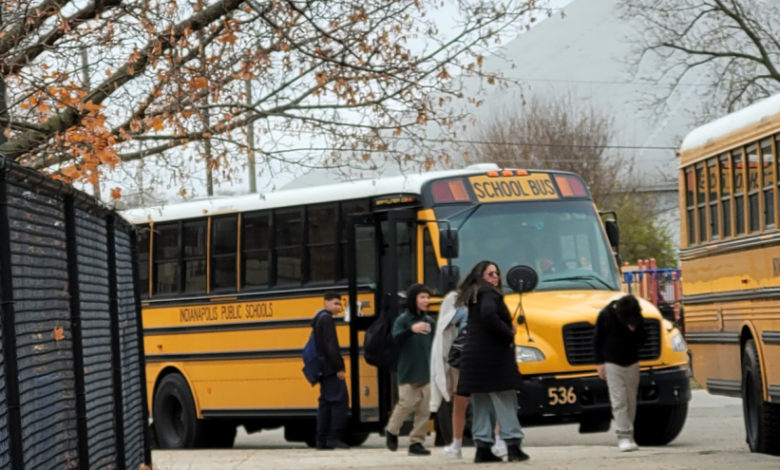
Indianapolis’ fast-growing charter schools could soon have a chance to share buildings with the city’s school district and offer students busing — but with a possible “grand bargain” of giving up some autonomy.
A panel ordered by the state legislature is hurrying to recommend by the end of December how the Indianapolis Public Schools and charter schools could work together to make busing and unused school space open to charters.
It’s the latest battleground in the decades-long fight between charter schools and school districts nationally over who has control of schools and the tax money that supports them. In Indiana, where state leaders strongly support school choice, power has shifted and to charters, which now educate than half of Indianapolis students.
The panel won’t make its final recommendations until Dec. 17, but is leaning toward creating a new governing body to oversee sharing of schools and buses. Last week the panel narrowed its debate to two approaches, both of which give power to charters and take it from the district’s elected school board.
the و to و and – تفاصيل مهمة
The first would create a “collaborative compact advisory board” of appointees from the district, mayor and charter schools. The second would create an Indianapolis Education Authority with a mayor-appointed board and new city secretary of education.
The panel’s vote to focus on these two options, rather than letting the district take the lead, drew boos from residents who want an elected board to make decisions, not an appointed one.
to و the و an – تفاصيل مهمة
Despite the boos, there’s strong support for expanded busing for charter school students in the city, where charters are not required to pay for buses, and usually don’tto save money for teachers and books. The panel, however, has already rejected offering buses to every student to attend any school, anywhere in the district they want, as too expensive, so there will be limits.
How many students will be affected also depends on another key issue to be resolved — whether all Indianapolis charters would have to opt into the new collective plan. Some of the proposals require participation and others don’t, which looms as a potential fight as the plan is finalized.
The Indianapolis Local Education Alliance will make final recommendations Dec. 17.
Any new plan will likely need approval from a heavily Republican and pro-charter state legislature, whose leanings are a backdrop to the debate.
the و will و to – تفاصيل مهمة
But though some shift of assets to charters is now all but certain, gains for those schools won’t come without strings. District schools and charter schools will have to give up some autonomy in return for a piece of the collective pie.
Scott Bess, founder of the successful Purdue Polytechnic charter high schools and of the Charter Innovation Center advocacy group, called that tradeoff a “grand bargain.”
“You’re going to have to have some standardization,” said Bess, who’s watching the panel closely. “That’s the bargain.”
Charter schools’ will likely have to adjust their daily schedules and yearly calendars to fit a broader busing plan that aligns vacation days and school opening and closing times so buses can take than one load of students to school each day.
to و the و and – تفاصيل مهمة
And charters that have built their own schools or leased them for years may have to turn those buildings and leases over to the new body, which could then decide to close a school and give the building to another operator.
There’s also debate whether charter schools in the city should even have a choice to be part of a collective plan. Early indications are that the state legislature would not back requiring charter schools to join.
Indianapolis Public Schools Superintendent Aleesia Johnson told the panel last month that if the goal is to make sure all students have transportation, then schools shouldn’t be allowed to opt out.
“If schools are given the option not to participate, and enough schools don’t, then you don’t have a system any ,” she said.
Angela Smith-Jones, Indiana University’s associate vice president for state relations and a member of the panel, also called for mandatory participation for all charter schools.
“Then it’s really solving the problem,” Smith-Jones said at the same meeting. “All schools are actually getting the exact same thing. Seems fair and equitable.”
the و schools و and – تفاصيل مهمة
Bess,who’s also a member of the Indiana state school board and of the National Association of Charter School Authorizers, wants the panel and state to give schools a choice. He said school leaders are weighing, even as the plans are being developed, whether giving up control for resources makes sense for them.
“The devil is clearly in the details,” said Bess. With school buildings, Bess said, schools have to weigh their own budgets, building debt and repair needs against giving an asset to an outside authority that could delay building upgrades or even shut a school down.
“Local property taxes (could pay) for all those improvements and maintenance and all the things that go with it,” Bess said. “But with that comes this grand bargain that we have to perform academically to a standard that is accepted across the city.”
“As I talk to a lot of charter school leaders, they’re looking at this saying, ‘Man, I don’t know that. I want to give up my full autonomy,’” he said.
to و that و the – تفاصيل مهمة
Schools are also weighing whether a central, but standardized busing schedule for all schools might mean giving up early dismissal days or other schedule differences.
“Some schools that I’ve talked to said ‘That’s not worth it to me,’ like ‘I’ll walk away from the money, because my schedule and my autonomy on how I operate is really important to me’,” Bess said. “Other schools said, ‘Oh, wow, you mean I could actually provide transportation for kids, and all I’ve got to do is give up a little bit of my quirky schedule.’”
Tommy Reddicks, CEO of the successful Paramount charter school chainhas opposed any changes to charter school autonomy, including demands from some residents that the state block new charters. He told the panel last week he also opposes forcing charters to be part of a transportation authority.
“Requiring districts or agents to control charter transportation in any mandated form, strips operational independence,” said Reddicks, whose schools do not provide buses to save money. “Mandates that limit charter autonomy violate the very reason the (panel) was created.”
to و the و charter – تفاصيل مهمة
But there’s a big financial incentive to join – a share of tax dollars the state legislature has already voted to give charters. The legislature voted this spring to give charter schools a share of local property taxes that have traditionally gone to districts starting in 2028, but some state officials have slated that money to go to the new collective busing and building effort — not to individual schools in addition to it.
That legislation, Senate Bill 1, would give charter schools $2,050 per student in local property taxes in 2028, rising to $3,750 per student by 2031.
“In Indianapolis, instead of having (property tax) transfers from IPS (the district) to the charters, that transfer is going to happen through the authority,” said Indiana House Education Committee Chairman Robert Behning.
“(If) you want to have access to that funding, then you need to participate in the authority,” he added.
to و in و the – تفاصيل مهمة
Behning said one limit the school district and some other advocacy groups have sought — limiting the number of authorizers that can approve new charter schools in the city — is unlikely to win support from the legislature.
Behning said he would never want only the city mayor’s office to authorize new schools because that would make the ability of new schools to open dependent on who wins the latest mayoral election.
“Whatever happens, we have to make sure that it can’t be changed by the next election,” he said.
the و to و he – تفاصيل مهمة
Did you use this article in your work?
We’d love to hear how The 74’s reporting is helping educators, researchers, and policymakers.Tell us how
how و Did و you – تفاصيل مهمة
Disclaimer: This news article has been republished exactly as it appeared on its original source, without any modification.
We do not take any responsibility for its content, which remains solely the responsibility of the original publisher.
Author:Patrick O’Donnell
Published on:2025-12-09 23:30:00
Source: www.the74million.org
Disclaimer: This news article has been republished exactly as it appeared on its original source, without any modification.
We do not take any responsibility for its content, which remains solely the responsibility of the original publisher.
Author: uaetodaynews
Published on: 2025-12-10 07:41:00
Source: uaetodaynews.com